Thursday, October 23, 2008

Grace by Richard Paul Evans


Grace

By Richard Paul Evans
Simon and Schuster, October 2008

Review by Heather Moore


If you are a Richard Paul Evans fan, you know that you’ll probably need a tissue when reading one of his books, especially towards the end. Grace is no different. This book debuted on the New York Times Bestseller list—and for a good reason. Heralded by Glenn Beck as Evans’ best book yet, readers will quickly find that this high praise is well deserved.

The book opens with a retelling of the well-known tale—The Little Match Girl. Of course with a precedent set like that, the theme of the story quickly comes to life. The reader is then thrown into the year 1962 in a poor neighborhood of Salt Lake City. Two brothers build a tree house—which becomes the place they spend almost every minute of their summer hours. With a working mother and a disabled father, they create their own entertainment by searching through the old junk in the garage.

When the main character, Eric, meets a runaway girl named Grace, he offers her a place to sleep in his backyard tree house. Little does Eric know, but Grace will be the one helping him, and changing his life forever.

But more than the story, and even more than the message, something extraordinary arises out of the pages. A mission from the author. Richard Paul Evans is a person who not only “talks the talk” but walks the walk. He’s launched a new project in conjunction with his charity, The Christmas Box International, called The Christmas Box Initiative. His goal? To help every youth in America who is aging out of foster care. It doesn’t take much imagination to see what a difficult road an eighteen year old has ahead of him with no parental support. Many of these youth simply become homeless. But The Christmas Box Initiative provides Christmas Box Lifestart Kits to the youths as they leave foster care. And that’s only the first phase.

Tuesday, October 21, 2008

Brittany's Books

By Brittany Mangus

Lately I have been channeling my inner Edward. And I can now tell, from reading your minds that all of you have always wanted to know which books I love to read! This is a short list of my favorite church-related books (other than the scriptures) (and my book) (ha ha).

Mantle: A Windy Day in August, at Nauvoo by Robert G. Mouritsen. This is a relatively short book about the day that some say Brigham Young received the countenance (and some said even the voice) of Joseph Smith, proving to them that Brigham was his intended successor. It has a lot of excerpts from pioneer-era journals. It's very interesting to read, especially if you're about to travel to Nauvoo.
Joseph Smith: Rough Stone Rolling, by Richard L. Bushman. There have been a lot of biographies written about Joseph, but I really enjoyed this one (some of it I took with a grain of salt). It really attempts to paint a "cultural biography" of the prophet. After reading it, I now see Joseph as he was: a real person with an extraordinary and exemplary calling as the prophet who ushered in the restoration.
Symbols in Stone: Symbolism on the Early Temples of the Restoration by Matthew B. Brown and Paul Thomas Smith. I love anything by Matthew B. Brown, but this book has a special place in my heart. This was one of the first books I read about the temple when I was preparing to go. It gives a wonderful perspective on temple symbolism and explains the symbols on the outside of the Salt Lake Temple.
The Savior and the Serpent by Alonzo Gaskill. Also a great temple-related book. (It talks a lot about the Garden of Eden and eternal progression.)
Brigham Young, American Moses by Leonard Arrington. I love Brigham Young. To me, he was tough as nails (and of course, the "Lion of the Lord" nickname fits him). I love that he was one of the only people who never betrayed Joseph Smith. I love that he had both a testimony of Joseph Smith and a testimony of Jesus Christ and the restored gospel. This book gave a great background on him. I recommend it.
Leaves from my Journal, Wilford Woodruff. This is a collection of excerpts from Wilford Woodruff's amazing journals. He of course is the source of many facts concerning the early history of the church.
Gospel Symbolism by Joseph Fielding McConkie. Another book I read while preparing for the temple. Read it even if you've already been to the temple. It really helps to open up another level of understanding concerning gospel principles and the Savior's atonement.
The Lost Language of Symbolism by Alonzo Gaskill. I use this more of a reference guide, it's like an encyclopedia.
Endowed from on High by John D. Charles. Another book I read when I was preparing for the temple. I read it again right after I received my own endowment. This book is one of the reasons why my first temple experience was so wonderful.
Brigham Young: Images of a Mormon Prophet, by Richard Holtzapfel and R.Q. Shupe. This is a coffee table book. (Err... hot chocolate table book?) It has lots of great photos of Brother Brigham and gives you another perspective on his life.
Joseph Smith: The Man The Mission The Message by Matthew B. Brown. Another... hot chocolate table book. Lots of great photographs of personal articles owned and worn by the Prophet and Emma.
Mafia to Mormon: My Conversion Story by Mario Facione. No, this doesn't have anything to do with that movie Mobsters and Mormons. This is an autobiographical account of Mario's life both before and after he left the Mob and joined the church. It's a quick read (105 pages) and I guarantee you'll read it again.

There are more of course, (like The Holy Temple by Boyd K. Packer, and Jesus the Christ by James E. Talmage, etc.) but I know most of you have read those. I wanted to talk about books that maybe you haven't read before. Or maybe you have read some of the books I've mentioned? What are your thoughts? Were you upset because you thought I was going to talk about the Twilight series and I didn't? Talk to me.

Monday, October 20, 2008

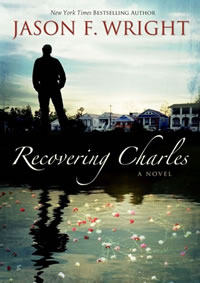
Recovering Charles by Jason F. Wright


Recovering Charles


By Jason F. Wright
#1 New York Times Bestselling Author
Shadow Mountain, September 2008

Reviewed by Heather Moore


“Every life has a second verse” is the theme reiterated throughout Jason Wright’s latest novel, Recovering Charles.

When Luke Millward, a Pulitzer winning photographer, receives a phone call from New Orleans, his routine life is turned upside down. On the heels of Hurricane Katrina, Luke is told that his father has gone missing.

Estranged from his father for many years, Luke decides to make the journey and join in the search. But the search for his father turns out to be a discovery of the soul—both past the present for Luke.

Throughout the story, we learn about Luke’s mother who became addicted to prescription pain medication and his father who faithfully stayed by her side until her tragic death. We also catch a glimpse of Luke’s father and his descent into depression and alcoholism following his wife’s death. Luke moves on with his life after graduation, but he never forgets his upbringing.

This novel was a wonderful, compelling read. The writing style is fresh and even poetic in some places. The characters are vibrant and engaging—I was caught up in the plight of the main character as he was swept into the devastation of Hurricane Katrina and started to put together bits of his past together as he tried to find his father. Readers will be reminded of the devastation that occurred in Louisiana and will see it firsthand again through Luke’s eyes.

Recovering Charles is a great story that is universal in appeal—for anyone who believes in a second verse.


Book is available for purchase here.

Wednesday, September 24, 2008

The Light of Ancient America, Vol 1 & 2--by Gary T. Wright


Reviewed By Heather Moore

As a historical fiction author myself, I might have a unique interest in reading the two-volume set, The Light of Ancient America. Whenever I read historical fiction, I’m looking for an experience, unlike my modern-day life and usual concerns. I want to be immersed in a tale that is rich and filled with the sights and sounds of another era. I want to meet characters who were challenged in ways and experienced things that I can only imagine.

So with all of these usual expectations, I cracked open Signs and Wonders, the first volume of The Light of Ancient America.

The first thing that impressed me was the author’s Historical Notes. It gave an overview of the purpose and background of not only the book, but the events that occurred during this time period. I found this helpful—not necessarily for myself—but if I were to share it with someone who had little knowledge of the Book of Mormon, I would be assured that they would “get it” before diving into the story.

The first volume begins about five years before the birth of Christ. A time when there are many prophets on the earth prophesying of His coming, and many others who are denouncing His name. In the Book of Mormon lands, the Gadianton robbers are a force to reckon with, for both the Lamanites and the Nephites.

The main character is none other than Gidgiddoni and his brother Jacob—two sons from the same family with opposing beliefs. The story is primarily of two brothers and their rise to power and position within the city of Zarahemla. With it comes greed and jealously on Jacob’s part, and he is party in sending his brother into exile. But even in exile, and working as a mere slave, Gidgiddoni’s leadership skills rise above all others. He is rightly given the nickname of Jaguar, which he becomes known as all around the country. Jaguar quickly redeems his good name and much to the dismay of Jacob, earns his full commandership back and is even promoted.

As Jacob dives into deeper waters of treachery, he joins the Gadianton robbers and plots to murder the leaders who have the control he seeks—including his own father and his own brother. He succeeds in poisoning his father, but Jaguar makes a narrow escape, thanks to his wife.

By the second volume, Honor & Arrogance, the situation escalates as the people start to falter in their belief. Even after the great signs of Christ’s birth, many years pass before the sign of his death comes. During these years, Jacob gains immense power and influence, using the Gadianton robbers as his pawns. On the other side, Jaguar must use all of his resources and strategy to stay one step ahead. Trials and temptations continue to abound and at one point, Jaguar faith is put to the ultimate test. When the great and terrible signs of Christ’s death come to the New World, everyone’s lives are changed forever.

These historical volumes are full of rich detail and immaculate research. It will open the minds and hearts of the readers and bring them to a greater knowledge and appreciation of the greatest era of mankind to date. The era when Christ lived and reigned upon the earth.

More information about buying the book, and reader group discussion questions, can be found on the author’s website:

Wednesday, September 17, 2008

Star Shining Brightly, by Marcia Mickelson


Review by Brittany Mangus
Thank you again, to Marcia who sent me a signed copy of her book. This is a story of Lauren, an LDS actress who wins an Oscar. She grows up in Salt Lake, a member of the church, and then, right out of high school, heads to Hollywood in search of fame.

The book begins at the point where Lauren has had several failed relationships and two children, but she is having great success as an actress. Lauren doesn't go to church anymore and she ends up re-evaluating her life and she sets goals as to what she would like it to become. Do you have to give up your values to become successful in Hollywood? Can a balance be reached? If you wanted to change, what would happen to you, your friends or your career?

I enjoyed this perspective, and I couldn't help thinking about some of the real LDS actors and actresses and wondering how they feel about all the trappings of Hollywood and being LDS.

Monday, September 15, 2008

Spare Change by Aubrey Mace


Spare Change by Aubrey Mace, Review by Emily Beeson of Deliciously Clean Reads

I've had a bit of trouble keeping my reviews up lately (4 1/2 months pregged...), but I have been pleasantly surprised by a few review books I have received and want to make sure they get their moments of fame.

The first pleasant surprise is Spare Change, a perfectly clean grown-up romance.

Riley is sick of making New Year's resolutions she doesn't keep. So, when her mom forces the family (again) to make them, she decides to do something really easy. She'll simply gather her spare pennies throughout the year and do something fun with them at the year's close.

However, working at a cancer treatment center gives her a new idea. She'll donate the pennies to cancer research. Riley tries to keep her goal a secret, but pretty soon the whole town is contributing to her fund.

During the process, Riley finds love. Will it be the cranky bank teller or the mysterious poem-writing secret admirer?

Spare Change was a pleasant surprise for a few reasons. 1. It's perfectly clean, which, let's be honest, when you just pick up a random book with no previous knowledge of it, that is unlikely. 2. The characters are well-developed. 3. The story has multiple levels that come together to make a great, fun romance. 4. If it wasn't getting so cold already, I'd say it is a perfect pool-side read. :)

Friday, September 12, 2008

Maus and Maus II by Art Spiegelman

I'm not sure about recommending these books here because the recommendations on this site are usually pretty tame, but they were too amazing for me to not mention them. So when it comes to these books, reader beware! These books are appropriate for their subject matter--they are not gratuitous--but they are gritty.

The Holocaust is a difficult subject that has been taken on by countless authors, each author trying to add depth and breadth to a story that is already too big to be grasped. But no matter how big of a challenge the Holocaust presents, writers need to write about this--especially writers who have a direct connection to it.

In what is probably one of the earliest graphic novels, Maus and Maus II is the story of Art and his father Vladek and their struggles to understand the Holocaust. Vladek is a Holocaust survivor who always wants to tell his survival tale but can never quite bring himself to do it until his son starts asking him questions. Overwhelmed by Vladek's grief and idiosyncrasies--many of which grew out of the war--Art turns to the only medium he knows to express himself: comics.

As his sketches the pain and frustration that have been the driving force of both their lives, the Jews comes out as mice (maus is the German word for mouse) and the Nazis come out as cats. The simple cat and mouse metaphor provides the clarifying juxtaposition that Art needs to emotionally process and record his father's story.

The Pulitzer Prize winningMaus volumes are raw and real. Seeing the story documented through comics allows the reader to approach the Holocaust from another angle--making it both more immediate and more complex. Maus and Maus II are books that should not be missed by anyone searching to understand the Holocaust.

A Night on Moon Hill by Tanya Parker Mills

Review by Heather B. Moore Award-winning author, Tanya Parker Mills (2009 Indie Book Award Winner for The Reckoning ), delive...